
The Wonderment of Creativity in Grief and Why it Matters for Organisational Change
This week, I had the honour of attending an extraordinary ceremony to celebrate the life of a friend. She was an art curator who loved expression through all forms of creativity. It was shared by the many guests that her send-off was reflective of how she lived. It was colourful, theatrical, musical, honest, beautiful and wild. Losing someone so young is hard, for everyone involved, but if there is one silver lining in this tragedy, it is to remind us that creativity is so much more than an amplifier of a message.
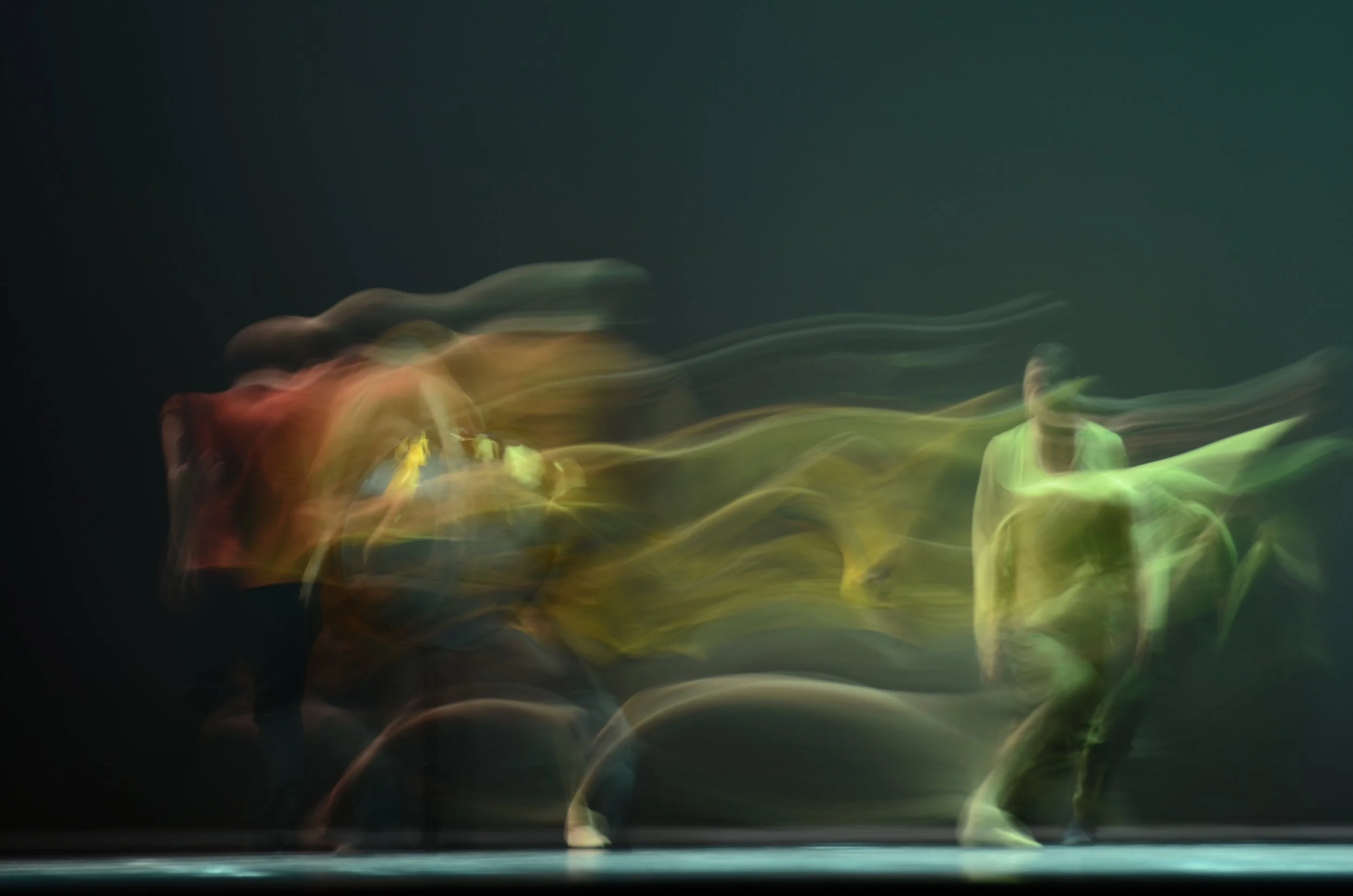
Creativity is the most profound and powerful way to move through grief. The venue of this life celebration was decked out in what resembled a native forest. It looked incredible and it smelt delicious. The outfits of choice ranged from Shakespearian to the sublime. The music bounced between a string quartet, opera, pop and doof-doof. A cabaret show demonstrated that abstract theatre has the means to move people into emotional spaces otherwise unavailable. Stories of life were shared through poetic expression and narrative. Grief moved through the group with dance and embrace.
It reminded me of my father-in-law's funeral. A man larger than life whose own celebration was performed through pantomime at the Bath Theatre in the UK. The theatre was chock-a-block and hundreds of people spilled over into the streets to watch his final show on the big screens set-up outside. It was a send-off to remember with a performance inclusive of 7 dwarfs, a golden goose and Cinderella. His own creative expression as a panto director, storyteller and Dame were valued so greatly by a community who showed up every single Christmas season to shout 'he's behind you!'.
But this not a tale of how to run a great funeral - although that is something we should all think about. Side-quest alert - for anyone involved in my send-off, please ensure the sublime to the surreal. The more random the better and I do want Wilson Phillips in attendance to sing Hold On. The irony really works for me and it would be a fitting circle of my life.
This is a story of change or more specifically, organisational change. I'm going to be as bold as to say that 'change' can be a hugely divisive word. Generally, you'll hear sentiments like "I love change" or mostly, "I hate change", I don't think I've ever heard someone say "I'm neither here nor there". The thing is, we change every day, biologically, emotionally, mentally, organisationally, whether we like it or not. The English word "change" comes from the Old French word changier, which traces back to the Latin word cambīre, meaning "to barter".
My shorthand with boards and executives at the commencement of a transformation initiative is that you have to lose something to gain something. The additive approach is rarely the answer. You can't just layer more on without taking things away. To really get into linguistics, additives are there to prolong food. They don't make it better, they just try to elongate their life past their natural used by date. Organisations try this every day in a desperate attempt to not let parts of their history or identity go. I get that, of course I do, letting something go means we have to grieve it and being open to grief means sadness. We've done a great job in organisations of fooling ourselves that we've removed emotion from work, but that removal is itself a kind of defence built precisely so we don't have to feel the anxiety of losing what we know. Instead of processing loss, that anxiety of loss shows up as scapegoating or denial or an obsessive focus on today's technical problem instead of tomorrow's real one. All of it seemingly easier than sitting with the loss.
So why let it back in? Well, the answer is easy, if you don't lose something, you never really gain anything either. Sad but true.
This morning as I was riding into work, I stopped at a school pedestrian crossing and watched a group of year 6 kids cross in all their book-week glory. One kid was dressed in the most magnificent sherlock homes outfit, decked out with a monocle, pipe and a checkered barret. Another in an outlandish mad hatter get-up. They were saying to the crossing supervisor, "this is our last ever book-week! We had to max out!!". Again, it made me think how creativity helps us transition from one place to the next.
These children know they have to leave primary school behind to go to high school, but there is a real loss associated with it. They are excited about moving to that new and largely unknown place and they need creativity to help them let something go and move towards something new. This is what a good developmental psychologist would call transitional space, the imaginative in-between where you get to hold onto what's ending and reach for what's coming, both at once, without either one overwhelming you to a point of total disfunction. It is magical, beautiful and a form of expression that can transcend words. The words probably can't even be expressed without the appropriate therapy to help you find them.
Every organisation is going through significant change right now. If you're not, wake up. AI has arrived and has been ringing the doorbell for at least a year whilst you've been in a blissful slumber. We need to move on from the way we knew our businesses operated and that is hairy-scary. We have to rethink it all, but the words may not be accessible for all that we feel or what we know we need to leave behind. If we really want our teams to move through this change with us, we have a role to play that is much larger than updating the operating model. We need to create holding environments that allow people to move through the emotional elements of loss, and leaders themselves have to be willing to be the container for that anxiety, to hold it steady enough that people can feel it without being flooded by it. It's no different to the year 6 book week or the wake. It is time for organisations to recognise that organisations are emotional spaces and the change equals both loss and opportunity. If you want your teams to adopt a new way, create space for the emotional response and use every creative tool available to move people through the emotion of the loss and towards a possible new future.