

NAIDOC Week - 50 Years of Deadly!
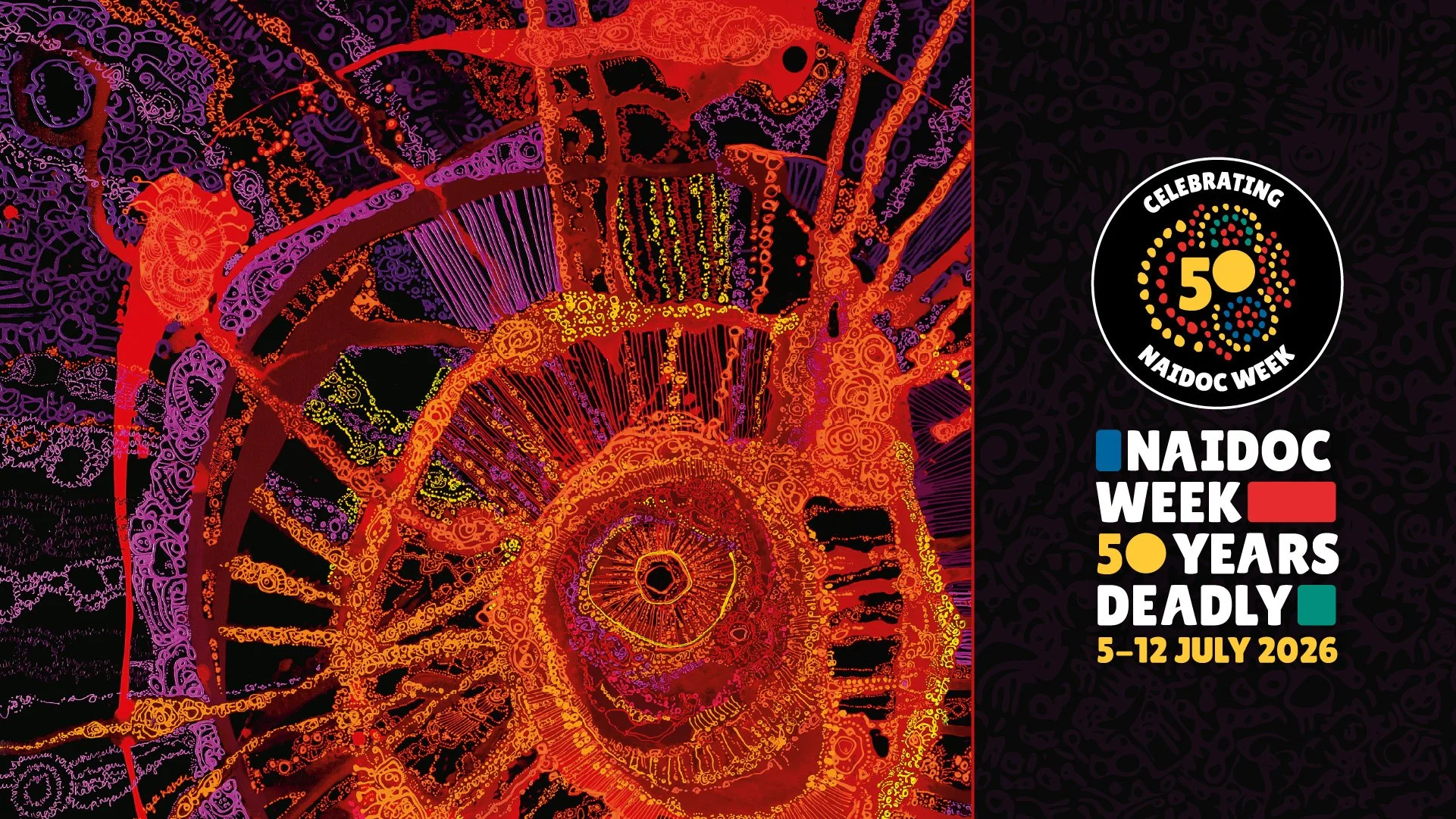
The NAIDOC Week poster 2026Paralpi was created by Zaachariaha Fielding, a proud Yankunytjatjara man from the APY Lands in South Australia.
This week is NAIDOC Week - 50 Years of Deadly!
Fifty years of Elders who stood firm. Fifty years of organisers who made space, artists who turned resistance into expression, and communities who kept showing up. It is a marker of everything that's been built when culture leads and community comes first.
It's also, I think, a moment worth pausing on for anyone who works in leadership and has an interest in system dynamics. A lot of what is currently being taught as "new" thinking in organisational life, interconnectedness, the idea that nothing moves in isolation, that every part of a system carries and responds to every other part, has been alive in Aboriginal culture for tens of thousands of years. Kinship systems where a person, an animal, a landmark, a colour, all carry relationship to one another. Land is a teacher, not a backdrop. In western society, which values individualism, structured, institutionalised curricula, and compartmentalised knowledge – we are challenged by the very notion of this difference. We collapse into seeing this deeper kind of learning as passive. The very idea of sitting, watching, waiting, demands something western learning never asked of us, real attention.
A few years ago, one of our leaders at Interchange, Chris Gabardi, was telling me about an amazing experience he’d heard of that ran through CERES - twelve days living on Country with Yolŋu men in East Arnhem Land. We agreed it would be a wonderful thing to do as part of his professional development. He came back and said something I haven't forgotten. "There is so much that happens and is understood, yet unsaid."
It's a lesson I keep having to relearn, including through my own reading. I recently finished Bruce Pascoe's Dark Emu on one of my monthly hikes, a personal practice I keep as part of my own leadership commitment each year. The book's central claims about Aboriginal agricultural systems are contested, historians are still actively debating them, but the debate itself made a point I hadn't expected. What we were taught as children, that Aboriginal Australia was simply hunter-gatherer, wasn't just incomplete. It was a story shaped by people who saw what they expected to see, because they weren't present long enough to see anything else.
Fifty years of NAIDOC week has been the corrective to exactly that kind of not-looking. It is an opportunity for all Australians to learn about First Nations histories and cultures and to participate in celebrations of the oldest, continuous living cultures on Earth. It has insisted, year after year, on story, truth, and culture told on First Nations' own terms.
If there's a leadership lesson in it for those of us still learning, I think it's this. Systems don't reveal themselves to the impatient. They reveal themselves to the people willing to show up, sit still and listen long enough to understand. This is a land full of stories and I never tire of hearing them.