
The AI anxiety is real, but so is the comfort.
I've been trying to work out what I actually feel about AI and I keep coming back to the same problem. I genuinely don't know if the anxiety I have about it is a legitimate response to something real, or just what it feels like to live in a world where every development, technological, political, environmental or otherwise, arrives pre-catastrophised and ready to ruin your weekend. The trouble is it's hard to tell the difference when the media is serving you end of days coverage on a loop.
I suppose that distinction matters, because if the anxiety is warranted I should probably lean into it harder, and if it's mostly noise I should probably get off my phone and mow the lawn.
To understand why I find that so hard to answer, it helps to know where I'm coming from.
I was a young teenager when the internet went mainstream, and my relationship with that particular turning point in human history mostly consisted of downloading Metallica albums on Napster and having absolutely no idea I was living through anything significant. Metallica, in fairness, had a much stronger opinion about Napster than I did. The band got mocked for caring about copyright in the age of free music, and turned out to be more right than anyone gave them credit for. Twenty five years later we're still arguing about the same question, just with AI generating Kurt Cobain vocals instead of kids on Napster sharing mp3s.
By the time I was old enough to think properly about the world, Amazon existed, Google existed, and the internet was simply the wallpaper of daily life. I didn't have to wrestle with what it meant, I just had to learn how to use it.
I decided to go and find out whether this time is different.
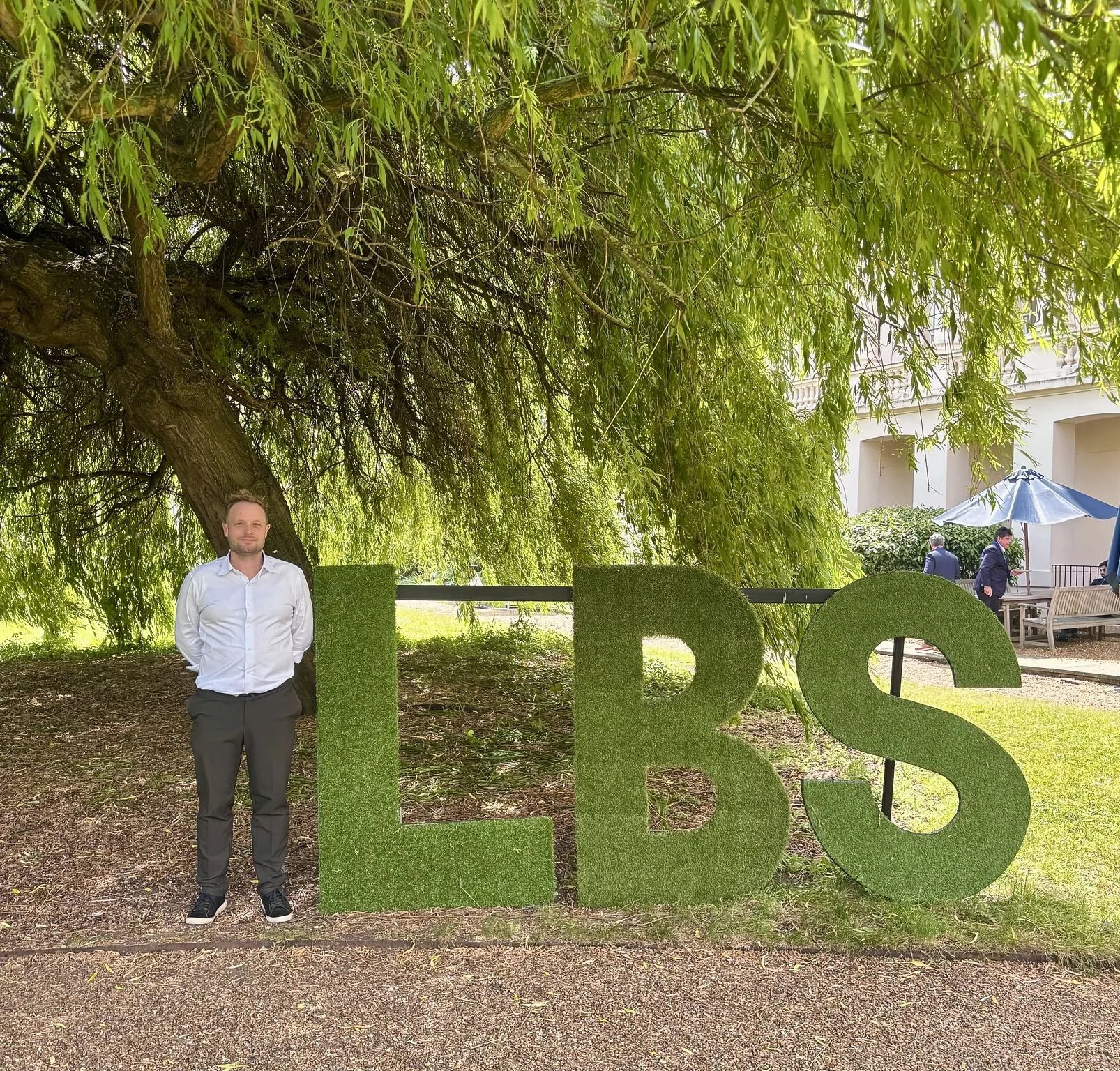
A couple of weeks ago I went to London Business School for a week on digital transformation and AI, and the room was full of senior people from industries and countries I don't normally spend five days with: government, mining, retail, finance, different continents, different contexts, all there for more or less the same reason, which was to work out what it means for the decisions they have to make when they get home.
One of the first things that landed hardest wasn't about AI at all, it was a statistic about us. We make approximately 35,000 decisions a day and consciously register about 70 of them, which means for the overwhelming majority of our waking lives we're already operating on autopilot, already applying unconscious judgement to habit, pattern, routine, and whatever the path of least resistance happens to be.
The more I thought about that, the more I realised AI isn't really taking over our decision making so much as moving into space we may have already left without really noticing.
That's where the more uncomfortable question starts to surface.
To be fair, borrowing thinking isn't a new human failing, it's just a very human one. We've always done it, leaning on religion, ideology, professional norms, the newspapers our parents read, the political parties we inherit rather than choose. We've always found ways to outsource the harder parts of our thinking to places we either trust or simply find convenient, and AI didn't create that tendency so much as make it considerably cheaper and easier to indulge.
For the better part of twenty years we've rewarded efficiency, optimisation and best practice, teaching people and organisations to benchmark, to follow proven models, to find what works and do more of it. Most of modern business is built on reducing uncertainty, removing friction and scaling what's already been proven, and AI has just become the best practitioner of best practice ever invented.
For me it raises a question, not whether we've been lazy, but whether we still trust our own judgement, and whether too many of us, for too long, have been getting by on borrowed thinking so consistently that we've gradually stopped developing a point of view that's actually ours.
I got a small, unexpected illustration of this over the weekend.
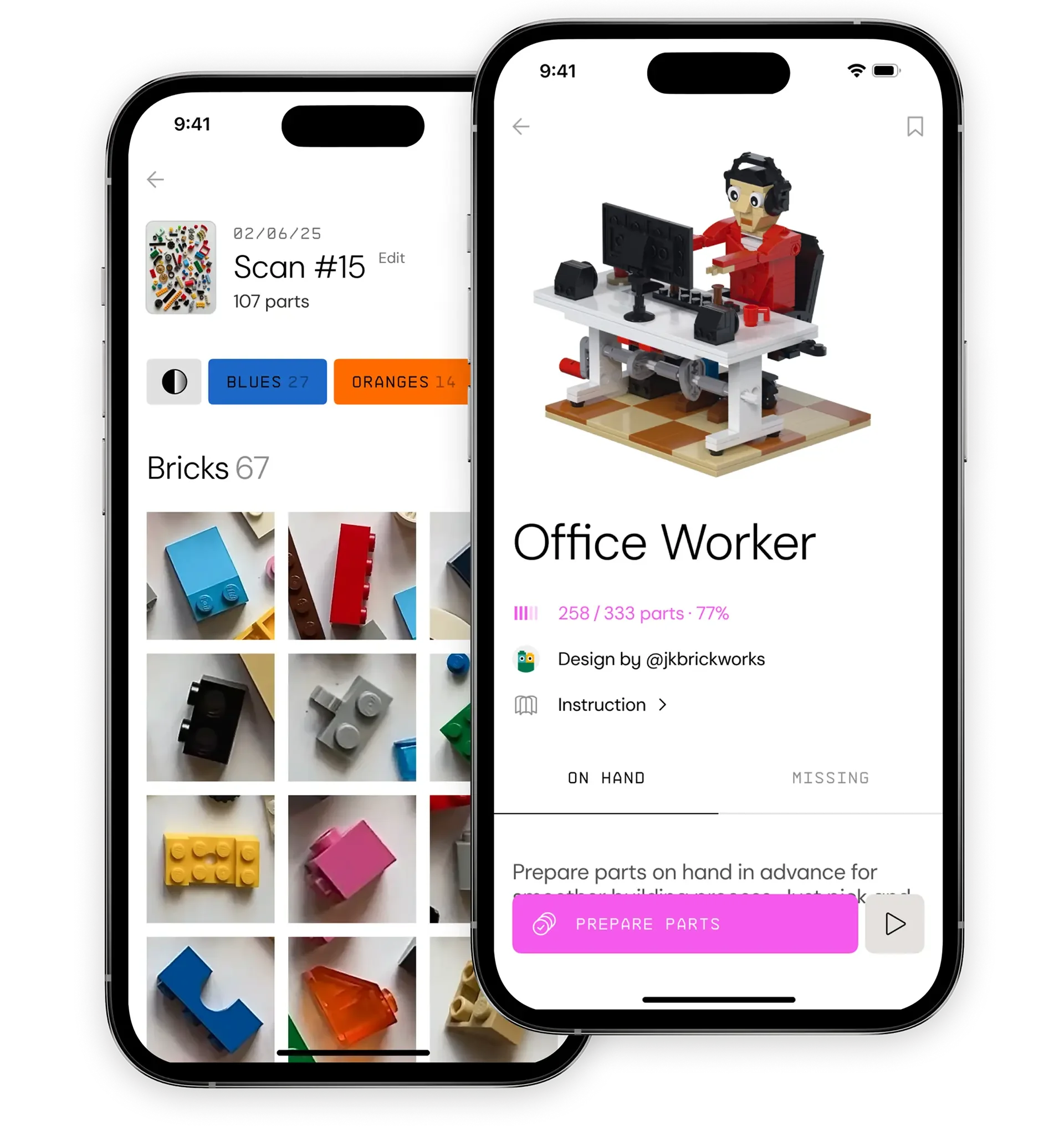
Via Brickit
I stumbled across an app called Brickit, which uses AI to identify every piece of Lego on the floor and generate step-by-step instructions for what you could build with it. It's genuinely impressive technology, but it raises an interesting tension, because you have to wonder whether we're helping our kids become more creative or just helping them arrive more efficiently at an answer somebody else has already worked out.
Tech helping us figure stuff out isn't new, of course. Google Maps removed the need for the Melways, calculators removed mental arithmetic, search removed the need to remember very much at all. The difference with AI is that search gave us information, while AI increasingly gives us answers. Information still requires us to think whereas answers don't always ask as much of us.
There's a version of childhood, and probably adulthood too, where the whole point isn't arriving at the right answer, but working out what the question even is, and I'd quite like my kids to have that version.
My kids are growing up inside all of this and will barely remember a world before AI, in much the same way I barely remember a world before email, and the Lego app is really just one version of a pattern that's been quietly running for years.
The creativity question is really just the surface of something deeper, what happens when certainty becomes the default setting?
We've spent the last two decades carefully curating ourselves into corners where everything confirms what we already think, everyone around us already agrees, and the other side of any argument isn't a person with a different perspective but a category of person to be dismissed. Brexit was my biggest personal eye opener on this, and I suspect I'm not alone in that. What's interesting about AI is that it doesn't just reflect that tendency back at us, it amplifies it. The internet we fed it wasn't a neutral record of human thought, it was years of content built to persuade: to sell something, to spread an opinion, to keep you scrolling, to make you feel like you were right all along. So when AI tells us what we want to hear, it's not a glitch, it's arguably what it was trained to do.
AI didn't create that tendency, but it does place an extraordinarily powerful tool in the hands of people who've already stopped practising the art of being wrong. The Lego app guides our kids towards a correct answer, the algorithm guides the rest of us towards a correct opinion, and while the mechanism is different the underlying temptation feels the same. The danger is that we've quietly become so attracted to frictionless answers that we've started preferring the comfort of validation over the messiness of genuine exploration, often without really noticing we made that choice.
What worries me isn't that AI will stop us thinking altogether, it's that thinking becomes increasingly optional. History suggests we're not always great at exercising muscles we no longer need, which, glancing at my beer belly, I can personally confirm. The things we value most, judgement, creativity, wisdom, purpose, aren't things we discover fully formed, they're developed through the messy process of wrestling with uncertainty, making mistakes and working things out for ourselves.
Whatever else AI becomes, it puts enormous pressure on the middle ground, because average is suddenly available on demand, fast, cheap for now, scalable, and increasingly good. The people and organisations living comfortably in that space are going to feel that pressure first, and the more uncomfortable thought is that maybe that's the point.
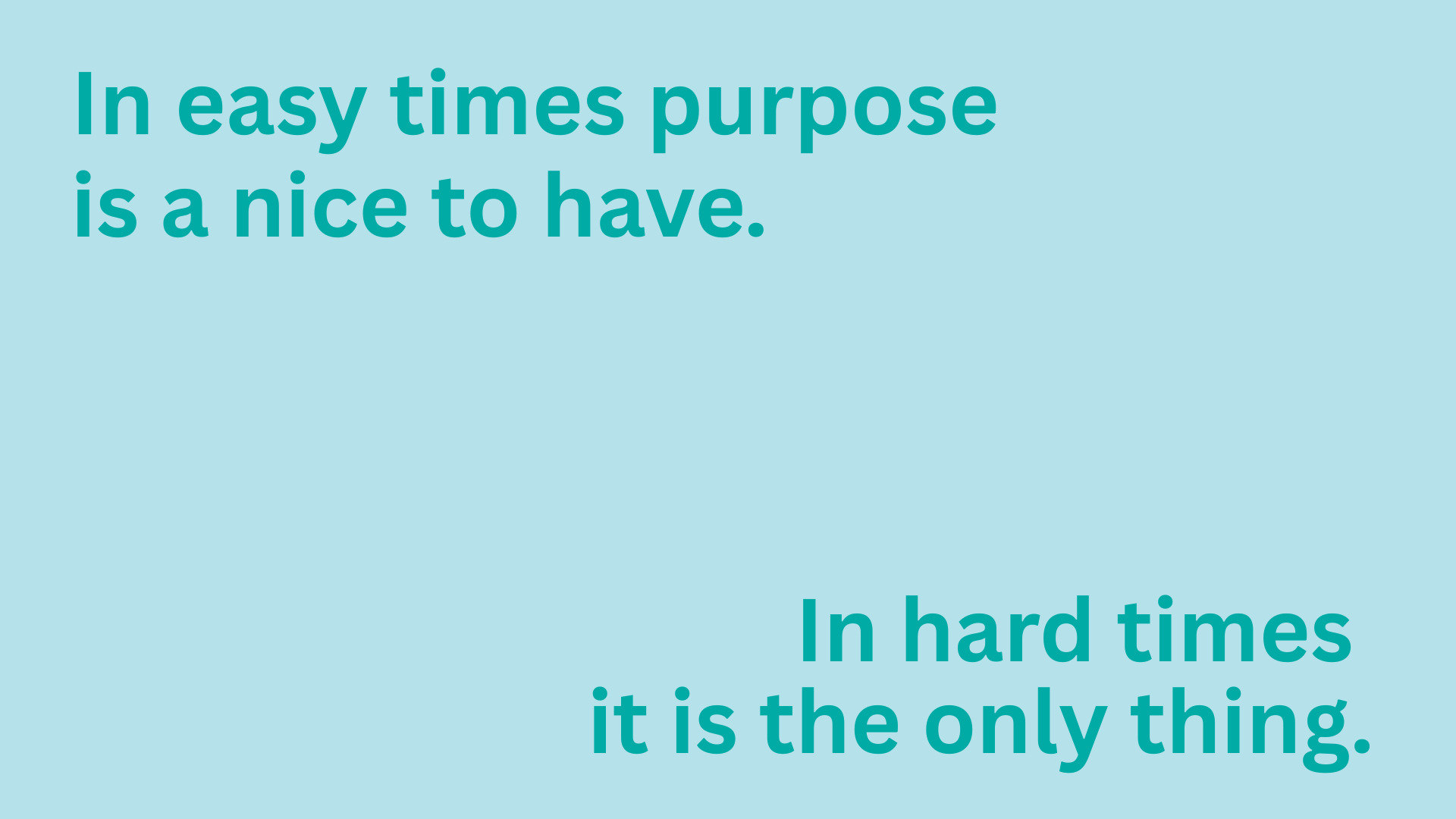
John Fallon, who was CEO of Pearson for eight years and spent much of that time navigating one of the more brutal digital disruptions in British corporate history, lived this more acutely than most. Pearson built its business on print, and watched the internet dismantle that model faster than anyone had planned for. His conclusion, and it's one that's stayed with me, was that in easy times purpose is nice to have, but in hard times it's the only thing.
He ended his final email to the entire Pearson workforce with a Bob Dylan quote: "If you're not busy being born, you're busy dying." I'm still not entirely sure whether that's the most executive thing ever done with a Bob Dylan lyric or the most Dylan thing ever done in a corporate farewell email, either way the point lands.
The easy times may have been making us soft in ways we didn't notice, and the discomfort many of us are feeling might not be fear of what AI will take, but the unfamiliar sensation of being asked to have a point of view, to be genuinely purposeful about something and to know the answer when somebody asks why you do what you do.
I came back from London still not knowing whether the anxiety is real or just noise, but somewhere during the week I stopped thinking that was the right question, because paying attention feels like the right response either way.
The tools are the easy part
At Interchange we help people through change for a living, specifically the kind that's complex, political and genuinely resistant to the belief that the right technology, deployed fast enough, will sort it out. We're seeing more organisations than ever reaching out right now, not because they don't understand the tools, but because they're realising the tools are the easy part. For the first time in my career, what I do professionally and what keeps me up at night as a parent and a human feel like exactly the same question.
What's ahead isn't a technology project with a change management workstream bolted on the end. It's the most complex, most human and most consequential change most organisations will ever attempt, and the organisations that navigate it well won't necessarily be the ones with the best AI tools, but the ones that know what they're actually for, the ones with a point of view, the ones capable of bringing people with them, and willing to acknowledge when something isn't working and adapt before it's too late.
What keeps coming back to me isn't whether AI can think, but whether we still will. If the technology genuinely takes care of the 34,930 decisions we were sleepwalking through anyway, the seventy we actually register might finally get the attention they deserve. So, how do we make the most of the judgement calls, the creative leaps and the moments that require something only you can bring.
The organisations that navigate this well will be the ones that know what they're for.